
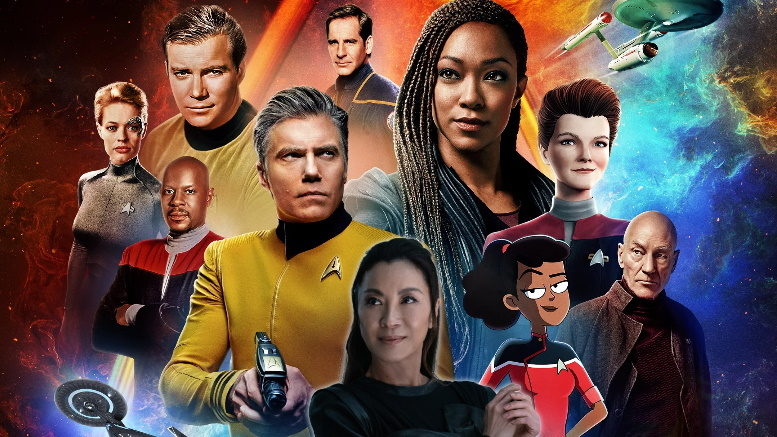
Star Trek is a vast science fiction universe that has captured the imagination of fans worldwide for over five decades. With numerous TV series and movies, it has become a cultural phenomenon that has impacted society in many ways. One of the most notable aspects of the Star Trek universe is the social innovations that have been introduced through its various TV series.
The original Star Trek series, which aired from 1966 to 1969, introduced many groundbreaking ideas for its time. The show portrayed a diverse crew of humans and aliens working together on the USS Enterprise to explore the galaxy. It was one of the first shows to feature an African American woman in a prominent role, played by Nichelle Nichols, as well as an Asian character, played by George Takei. The show also tackled issues such as racism, war, and sexism, presenting a utopian future where humanity had overcome these problems.
In the 1980s, the Star Trek universe expanded with the release of Star Trek: The Next Generation. This series continued the theme of diversity and equality, with a new crew led by Captain Jean-Luc Picard, played by Patrick Stewart. The show introduced new concepts such as the Prime Directive, which prohibited Starfleet from interfering in the affairs of other cultures, and the idea of a post-scarcity society, where resources were abundant and people worked for personal fulfillment rather than material gain.
Star Trek: Deep Space Nine, which premiered in 1993, was a departure from the previous Star Trek shows. It was set on a space station rather than a starship, and its characters faced complex moral dilemmas and political intrigue. The show tackled issues such as religious extremism, terrorism, and genocide, and featured a diverse cast of characters, including a black commander, played by Avery Brooks, and a shape-shifting alien, played by Rene Auberjonois.
In 1995, Star Trek: Voyager premiered, with a new crew led by Captain Kathryn Janeway, played by Kate Mulgrew. The show was notable for its strong female characters, including the first female captain in a Star Trek series. Voyager also explored themes of survival and the ethics of using advanced technology to overcome challenges.
Star Trek: Enterprise, which aired from 2001 to 2005, was a prequel to the original series, set in the early days of Starfleet. The show explored the origins of many of the concepts and technologies seen in later series and presented a more realistic and gritty vision of the Star Trek universe. It also introduced the character of T’Pol, played by Jolene Blalock, a Vulcan science officer who struggled to reconcile her logical nature with her emotions.
The most recent addition to the Star Trek universe are Star Trek: Discovery and Star Trek: Strange New Worlds, . The shows feature a diverse cast of characters and explores themes such as identity, prejudice, and redemption.
Overall, the Star Trek universe has been a source of inspiration and innovation in popular culture. Its vision of a future where humanity has overcome its flaws and achieved a utopian society continues to resonate with audiences today. The series has introduced groundbreaking concepts such as diversity, equality, and post-scarcity economics, and has tackled complex moral and political issues. Its impact on society cannot be overstated, and it remains a beloved and influential franchise.








Leave a Reply
You must be logged in to post a comment.